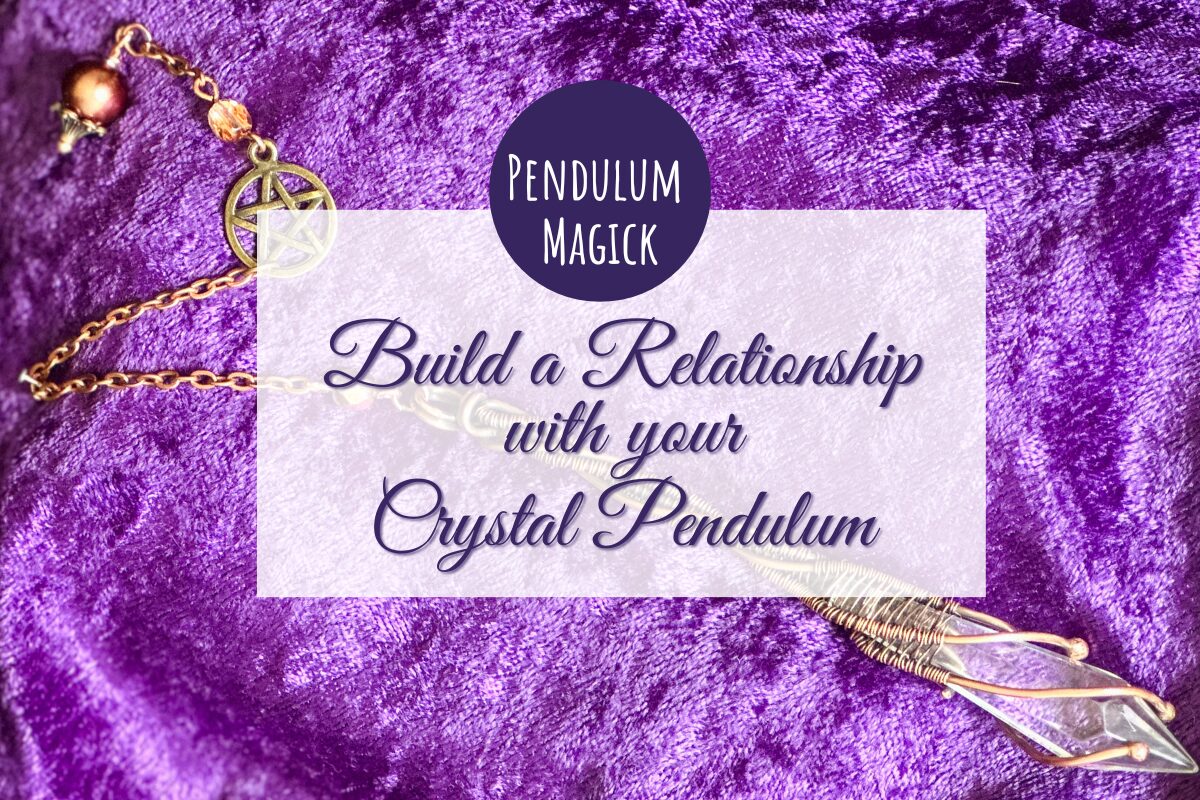
There's something undeniably captivating about a crystal pendulum — the way light moves through the stone, the weight of it in your hand, the sense that you're holding something that carries its own quiet energy. It's easy to fall for one before you even know how to use it. But a pendulum is only as useful as the relationship you build with it. I've been working with them long enough to know that the tool itself is only part of it — the other part is the time you put into learning its language and letting it learn yours. This post covers two things that go hand in hand: how to cleanse a new pendulum before you begin working with it, and how to build the kind of working relationship that deepens and becomes more reliable over time.
 Cleansing Your Crystal Pendulum
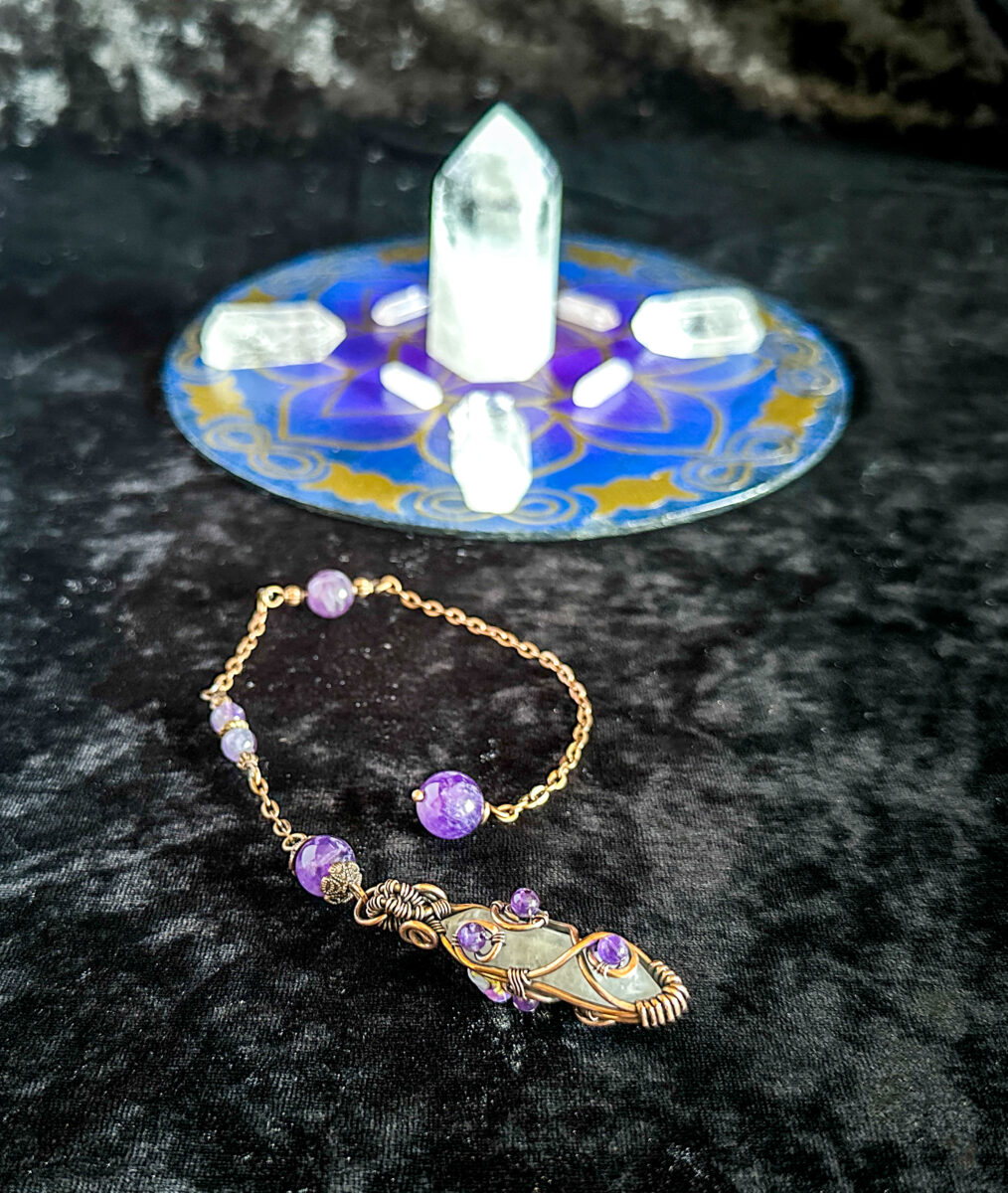
Before you begin working with a new pendulum, cleanse it. It will have passed through multiple hands and environments before reaching you, and clearing that residual energy gives you a clean starting point — just you and the tool, nothing carried over from before.
But cleansing isn't a one-time step. I cleanse my pendulums regularly — after an emotionally heavy reading, after someone else has handled them, after a long period of not using them, and as a general reset when something feels off. The more you work with a pendulum, the more you'll develop a sense of when it needs clearing. Trust that.
Water
Hold your pendulum under cool running water and let it flow over the stone for a minute or two, visualizing it washing away any energy that isn't yours. A simple and effective method — but check your crystal first. Some stones, including selenite, malachite, and pyrite, are water-sensitive and should not be cleansed this way.
Smoke
Pass your pendulum slowly through the smoke of your chosen incense or herb bundle, turning it so the smoke reaches all sides. My Sacred Purification Herbal Blend was made specifically for this kind of clearing work and works beautifully for cleansing ritual tools.
Sound
Strike a singing bowl, bell, or tuning fork and pass your pendulum slowly through the sound waves, or simply hold it nearby as the tone resonates around it. Sound cleansing works by using vibration to break up and disperse stagnant energy — the same principle as smoke, just through a different medium. A clear, sustained tone is what you're looking for. Let it ring out fully before you begin and repeat until the sound feels clean and even rather than flat or dampened.
Moonlight
Place your pendulum outside or on a windowsill overnight under the light of the full moon. This is one of the gentlest methods — safe for all crystals, and particularly fitting if your pendulum has a strong lunar connection.
Earth
Bury your pendulum in soil for 24 hours, then brush it clean. The earth absorbs and neutralizes energy naturally. Use a pot of garden soil if you don't have outdoor access, and mark the spot — it's easy to lose a small pendulum this way.
Crystals
Lay your pendulum on a bed of clear quartz or amethyst overnight. Both are natural cleansers that absorb discordant energy without needing to be recharged themselves as frequently as other methods.
Choose the method that suits both you and your crystal. If you're unsure, smoke or moonlight are safe for virtually any stone and a good place to start.
Building a Relationship with Your Crystal Pendulum
Building a relationship with your pendulum takes time — and it's worth taking. This isn't about programming a tool, it's about developing a working partnership where both sides become fluent in the same language.
Start by establishing your baseline. Before every session, ask your pendulum to show you yes, then show you no. Hold it still, ask the question, and observe the movement. This step is easy to skip once the responses feel familiar, but in the beginning it's essential — it recalibrates the connection at the start of each session and helps you recognize when something feels off. I still return to it whenever I pick up a pendulum I haven't worked with in a while, or when I switch to a different one — it's less a diagnostic step at that point and more of a greeting, a way of reestablishing the connection before we get to work. After years of practice my baseline hasn't changed, but that moment of checking in still matters.
How you communicate with your pendulum is personal. I form my questions mentally — in practical terms, saying them aloud tends to bring my dogs running. In group work or when reading with another person, I'll speak the question out loud. Both work. What matters is that the question is clear and specific in your mind before you ask it.
The relationship deepens through consistent use. Work with your pendulum regularly, even for small questions, even when you don't strictly need guidance. The more you use it, the more fluent the conversation becomes — and the easier it is to recognize when the answer is clear versus when something needs a second look.
Practicing with Simple Questions
Start with questions you already know the absolute answer to — not questions you're hoping to get right, but questions with no ambiguity. “Is my name [name]?” “Is my birthday in January?” “Am I an only child?” “Is it raining outside right now?” These aren't tests of the pendulum — they're how you and the pendulum learn to speak the same language. When you get consistent, clear responses to questions with known answers, you'll know the connection is established and you're ready to work with questions that actually matter.
Integrating Into Your Magickal Practice
Once the baseline is established, your pendulum becomes useful far beyond yes and no. Bring it into your spellwork for ingredient selection, spell crafting decisions, and checking your circle — all of which I cover in depth in Pendulum Spellwork: Beyond Yes/No. The more contexts you use it in, the more fluent the relationship becomes.
Journaling Your Sessions
I still journal my pendulum sessions — the date, the moon phase, the question I asked, the response I received, and the circumstances around it. Over time the journal becomes genuinely useful: you start to see patterns in when the responses are clear versus murky, which questions you keep returning to, and how your practice has evolved. It also keeps you honest — it's easy to misremember an answer that didn't go the way you hoped.
Storing and Caring for Your Pendulum
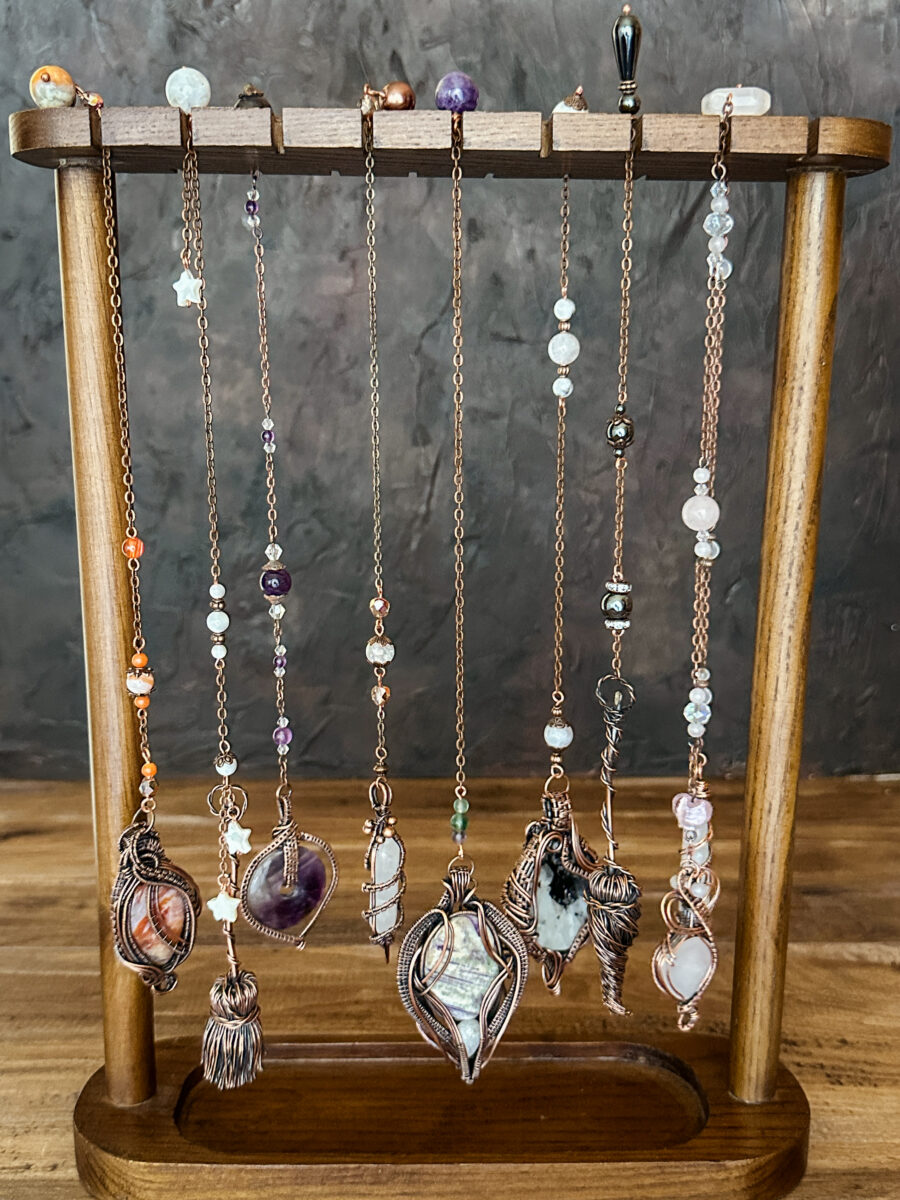
How you store your pendulum between uses is part of the relationship. My go-to pendulum sits in a selenite dish on my altar — selenite is a natural cleanser, so it's maintaining the pendulum's energy even when I'm not actively working with it. Pendulums I use less frequently hang on a pendulum stand, which keeps them untangled and accessible without being buried in a drawer. When I travel with one, it goes in a padded silk pouch — crystals and copper wire both benefit from not rattling around loose.
The general principle is simple: keep your pendulum somewhere intentional. Not tossed in a bag, not mixed in with jewelry. The care you give it between sessions is part of the ongoing relationship.
When a Pendulum Isn't the Right Tool
A pendulum works best with clear, specific questions. There are two situations where I reach for something else instead.
The first is when the question needs a detailed answer. “What is blocking me from achieving this?” is too layered for a yes or no response — although sometimes it can be reframed: “Is self-doubt the primary block here?” is something a pendulum can actually answer. If the question can't be reframed that way, tarot or journaling will serve you better.
The second is when I want a specific answer so much that my ego is standing between my intuition and the pendulum. This is the harder one to catch, because it doesn't always announce itself. If I notice I'm asking the same question repeatedly hoping for a different response, that's a sign my ego is louder than my intuition and I put the pendulum down. No tool works well when you're not actually open to the answer.
The Relationship Is the Practice
The relationship with your pendulum isn't something you build once and finish. It develops the same way any working relationship does — through consistent use, honest engagement, and paying attention to what you're receiving. That includes knowing when to put it down. The questions you bring to it will deepen as your practice does. That's the point.
If you're looking for your first pendulum or adding to your practice, you can browse the full collection of handcrafted crystal pendulums in the shop — each one cleansed, blessed, and dedicated before it ships.